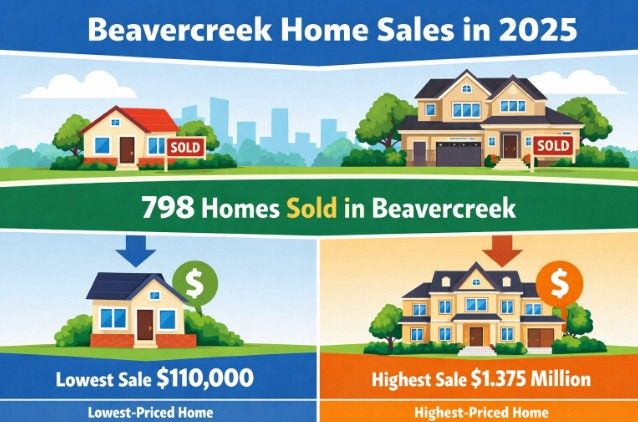
When interviewing a real estate agent to sell your home, do not be afraid to ask a very specific question: How many houses did you sell in Beavercreek in the last year?
What you want to avoid is hiring an agent who sells a large number of homes overall but has very little experience in your specific city. For example, an agent may sell 100 homes per year across the greater Dayton area, but if only one or two of those sales were in Beavercreek, that agent may not be the best fit for your home.
You are often better served by an agent who sells fewer homes overall—perhaps 40 per year—but has deep concentration in Beavercreek, such as 15 sales within the city. That type of local experience can make a meaningful difference in pricing strategy, negotiation, and avoiding costly missteps.


Do not hesitate to be specific. You want to be sure the agent you choose is genuinely comfortable and experienced working within your home’s price range.
As real estate agents, we tend to operate within certain price points based on past experience, confidence level, and the type of clientele we actively market to. While the mechanics of selling a home are generally similar at all price levels, comfort and familiarity with a specific price range can significantly impact strategy, presentation, and negotiation.
For example, an agent who typically sells homes in the $100,000 to $200,000 range is certainly capable of selling a $650,000 home. However, if they do not regularly work in that higher price point, they may be uncomfortable—even if they never say so. That discomfort can show up in pricing decisions, marketing execution, buyer screening, and most importantly in contract negotiations.


The most reliable way to price a home is to approach it the same way an appraiser does. In a financed transaction, an appraiser will be involved regardless, so pricing with the appraisal process in mind helps reduce risk later in the transaction.
What you do not want is an agent who simply goes to Zillow and defaults to the Zestimate as a suggested list price. You also want to avoid an agent who asks what price YOU want and agrees to list the home there without first verifying that price using comparable sales.
I prefer to start with an appraiser-style analysis and then layer in experience and judgment based on how buyers are likely to react to the property. This is especially important when a home has features that are difficult to quantify, such as an unusual floor plan, an addition that does not blend seamlessly, or a home that sits on an awkward lot or busy street.
In these situations, there may be no perfect comparable sales, which is where experience and market intuition matter.

Bracketing to Find Value
When exact matches are not available, appraisers use a technique called bracketing. For example, if a home was built in 1980, an appraiser may bracket construction dates and look at homes built between 1970 and 1990 to maintain a similar age profile. For instance, you wouldn’t want to compare the newer homes of Sky Crossing to an older subdivision like Shaker Heights.
Appraisers also bracket square footage to avoid excessive adjustments. If a home is approximately 2,000 square feet, it makes far more sense to compare it to homes between roughly 1,700 and 2,300 square feet than to compare it to a 3,000-square-foot property.
This is the same methodology I use when analyzing sales data in the MLS. By bracketing age, square footage, location, and features, I can identify what similar homes have actually sold for.

Real estate teams have been around for quite some time and have become increasingly common. I’d say in the last decade the number of teams in Beavercreek have doubled or even tripled although still heavily outnumbered by the traditional solo agent.
There is nothing wrong with a team-based approach although it does have limits.
In most team structures, the team leader is the person who appears in online searches, advertisements, or marketing materials. Marketingwise, with team support, that agent rises toward the top of internet search results for closed properties - this is a fundamental reason for the team structure - to get more leads.
This is the agent who meets with you at your home, views the property, and presents the marketing strategy. That team leader may have anywhere from one to ten or more agents working under them.


While this model can be effective, many homeowners prefer working with one dedicated agent from start to finish.
When a single agent is involved in all aspects of the transaction—from pricing and marketing through negotiations and closing—there is greater continuity and fewer opportunities for details to be missed.
Do not be hesitant to ask directly whether an agent is part of a team. Not all agents volunteer this information upfront, and some may prefer that sellers assume they are handling every aspect of the transaction personally.
Ultimately, choosing between a team-based approach and an individual agent is a personal decision. The key is understanding the structure in advance so you know what to expect and how your transaction will be handled.
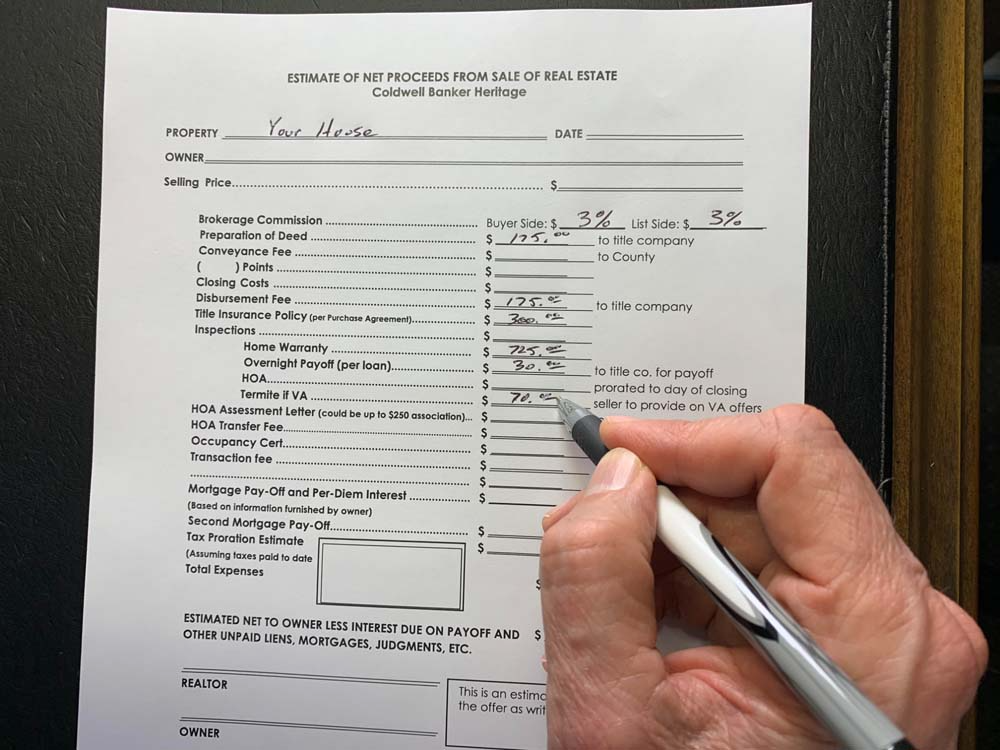
Home sellers understand that a marketing/brokerage fee is paid to sell a property. What many sellers do not realize is that there are several seller-paid closing costs beyond the brokerage fee. Understanding these costs upfront helps avoid surprises later.
Below is a breakdown of common seller expenses when selling a home, including those typically seen in Beavercreek and the Dayton area.
1. New deed
The seller pays for preparation of the new deed. I typically estimate this cost at approximately $200.
2. Conveyance fee (transfer tax)
This is a seller expense and varies by county and is paid to the county. It is usually calculated at $2 to $4 per $1,000 of the sale price, depending on the county. Think of it as a sales tax.
3. Seller-paid buyer closing costs
In some transactions, the seller agrees to pay a portion of the buyer’s closing costs as part of the negotiation. In strong seller markets, this is less common, but it can still occur depending on price, condition, and financing terms.


8. HOA transfer fee
Some HOAs charge a fee to transfer ownership to the buyer. Under the Dayton Area Board of Realtors contract, this is a seller expense. I typically estimate this fee at around $150.
9. Brokerage fee
The brokerage fee consists of two parts: the listing side fee and the cooperative fee paid to the buyer’s agent and brokerage. A common structure is 3 percent on the listing side and 3 percent to the buyer’s side, for a total of 6 percent.
An experienced agent should provide you with a written estimate of net proceeds showing each of these costs based on a projected sale price. This breakdown allows you to see how the numbers shake out so you’ll know what to expect.

Pay special attention to the answer here. You are looking for specifics not generic statements like, ‘Put it in the Dayton MLS and put a sign in the yard’.
1. Pricing & Positioning
-Analyze recent Beavercreek comparable sales and current market conditions. This needs to make sense. You need to see the comparables and how they stack up against yours. Did the agent bring comps with them? If so, are they complete so you can see a full set of pictures and info or did you just get a page with a list of homes and prices? Are the comparables in your neighborhood? If you live in Country Club of the North you don’t want comparables from Grange View Acres, that’s not a similar neighborhood.
-Price strategically to drive buyer urgency and strong showing activity. You need to price within 3% of market value. If it’s a 100,000 house don’t go above 103,000. Buyers need to see it as a deal. Buyers need to worry they will miss out if they don’t act. Pricing above the ‘strike range’ means a buyer may say, ‘Let’s keep looking, maybe we will come back”. That’s not urgency and you are inviting low offers and extended marketing times.
-The idea is to position your home to stand out within its specific neighborhood and price range. Experienced buyers and Realtors will recognize a fair price.


4. Showing & Activity Management
-Monitor showing feedback and buyer activity. They should have a system in place to get feedback from each showing. This can be used to make adjustments in price and condition.
-Adjust strategy quickly if market conditions shift. Home values are like a stock, they adjust constantly with inventory, interest rate, number of buyers and overall economy. If one or two similar homes go on the market at the same time as yours, it will affect pricing.
5. Offer Strategy & Negotiation
-Create leverage through buyer competition whenever possible. Multiple offers tend to make the price go up. Attractive pricing sets the stage for this. Setting a deadline for offers can be a good strategy for some homes. This way you are not taking the first offer and allowing time for potential other offers to come in and compete.
-Negotiate price, inspections, and terms to protect your bottom line. Is the agent trained to protect you? They should have some credentials proving this. SRS is a Seller Representative Specialist designation that can be earned with concentration on advocating particularly for a seller. Others like the CRS, Certified Residential Specialist and GRI, Graduate of Realtors Institute demonstrate the agent’s commitment to the industry and protecting their client.
-Guide the transaction smoothly from contract to closing. Early on in my career I had a seasoned agent tell me, ‘We get paid to worry so they don’t have to’. What she meant by that was don’t worry your client with issues that come up because there are many. Get things handled so the deal goes smoothly and the client thinks it was all easy.